Tire Mounting Tips Updated 07/02/2007 Rev. 1

These instructions are provided by Pro-Line, the manufacturer of the tires, and are specific to the Pro-Line 1074 and 1071 tires. We are providing the instructions as-is with the exception that we do not recommend ventilating the rim when using these tires for robotics. We do recommend gluing the tire to the rim as shown.

One of the most important factors in radio control car racing is properly mounting your tires. We are often asked how mounting your tires can improve vehicle performance. Some of the most important parts of tire mounting are: Putting holes in your wheels to vent the tire. Cutting the foam to fit the tire and wheel properly. Centering up the foam in the tire. Gluing the tire properly and using rubber bands to help hold the tire down onto the wheel while the glue sets up. We have tried to highlight all these factors in the steps that follow so that you to can have perfectly mounted tires every time.


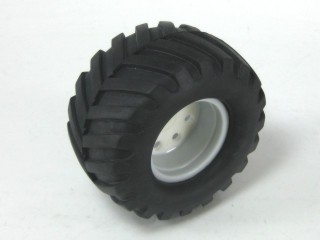
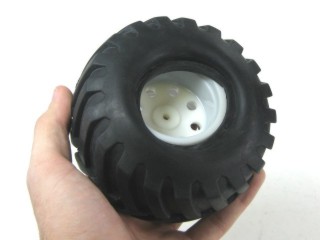
Tires Mounted to the Rims
 
What You'll Need
This is the stuff you will need to mount your tires: Scissors, sharp hobby knife, thick rubber bands (size #64 work well), and Pro-Line Premium Blend Thin CA (Part #6005-00).

What You'll Need
 
Vent the Rims
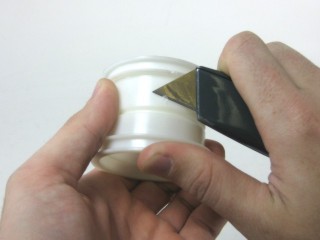
Step 1. Tire ventilation is very important; if a tire is completely sealed to the rim with air trapped inside, it will give a bouncy ride. If there is some ventilation, but too little to let the tire compress and rebound quickly, the tire may “flat spot” after being compressed by a bump. Using your hobby knife, carefully ream two 3/16” holes on opposite ends of the wheel. This will allow the tire to “breathe” when running on rough surfaces.
 
Note: Clean all gluing surfaces with alcohol for greater adhesion.

Figure 1.
 
Shape the Foam (Optional)
Step 2. All soft-compound Pro-Line tires include foam inserts to support the tread. These may be installed without modification, but for maximum performance, it is best to trim the foam to match the profile of the tire. Using scissors, trim all four “corners” of the insert as shown. This prevents the foam from bunching in the sidewalls and over the rim flanges.

Figure 2.
 
Foam Installation
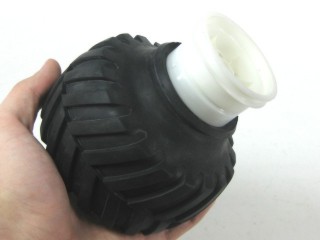
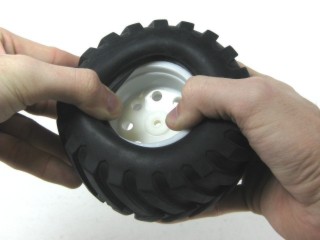
Step 3. Place the foam in the tire so it is centered and true, with as few wrinkles and folds as possible. It helps to “work the foam in” by squeezing and pushing the foam around the inside of the tire.


Figure 3.
 
Rim and Tire Assembly
Note: Some tread designs are directional. Make sure you have the tries oriented on the rims properly before you glue anything!

Step 4.
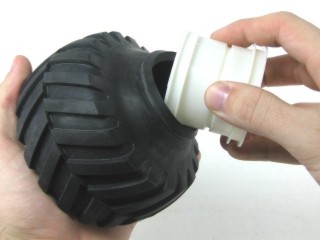
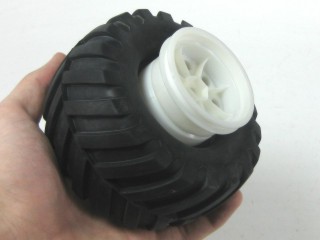
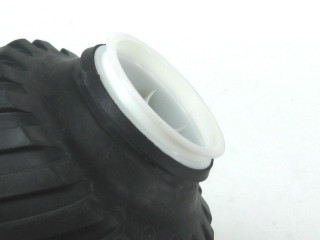
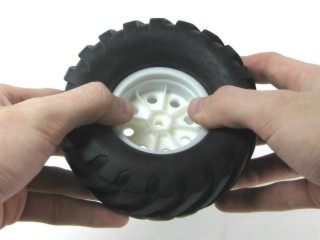
Your tire and rim are ready to come together. Start by sliding the wheel through the tire, making sure that the lettering on the tire is to the outer side of the wheel. When the tire bead appears to be properly aligned between the rim's mounting flanges, give the assembly a spin to make sure it is “true” and realign the tire as needed.
 
Note: For truer-spinning, better-bonded tires, remove any excess rubber from the gluing surfaces of the tires before mounting them.

Figure 4.
 
Gluing
Step 5. Before gluing the tire to the wheel, wrap a rubber band around the the tire being glued. This ensures a tightly bonded, true tire with a gap-free bead. Pull a section of the tire up and away from the rim just enough to place a small amount of tire glue on the bead of the wheel, then lower the tire back into place. Do this quickly until you have glued the full diameter of the wheel, then run a thin layer of glue around the outer edge of the bead. Set the wheel aside and allow plenty of drying time before moving to the other side.


Figure 5.